Showing posts with label family story time. Show all posts

Wednesday, October 1, 2014

Family Storytime Presentation

This is my presentation as part of a panel, "Storytime Shake-Up," for the 2014 New Jersey Youth Services Forum held on October 1, 2014. A copy will also be available on the New Jersey State Library's Youth Services site.

FAMILY STORYTIME - 5 QUICK TIPS
Linda Meuse
1.  Engage all ages
     Humorous stories and folktales have a wide appeal.
     Book illustrations should be clear and colorful to keep the interest of the little ones.
     Pop-up books and lift-the-flap books will appeal to all ages.
     Don't forget the grown-ups! Draw them in with humor.
2.  Mix it up
      Use different types of storytelling.
      There are many options:
          draw and tell stories
          paper cutting stories
          flannel board stories
          prop stories
          puppet stories
       Keep props simple. Spend time on those that will be used frequently.
       Flannel Friday's Pinterest Pages provides a wealth of storytelling ideas.
3. Make them guess
     Guessing games appeal to all ages - patterns, hidden object, memory, what am I?
     The level of difficulty can be adjusted for various ages.
     Stories and books that involve guessing appeal to all ages.
4. Be flexible
     Have a variety of books suitable for both preschool children and toddlers.
     Ages will vary from program to program.
     Drop or add stories depending on the dynamics of the group.
     Finger puppets work well when the group is young.
     Using visuals when telling a story helps young children to focus.
     Sing songs or play games when the group gets restless.
     Don't worry if you lose little ones while doing a story for older children.
          Follow the longer story with something for the little ones.
          Often the little ones like to emulate the older children and will listen.
5. Make it yours
     Sing if you like to sing.
     Do a craft if you like crafts.
     Pick stories that you enjoy, not because they fit a theme.
     You will learn what works with your group over time.
     Tweak your program to fit your group using formats that work for you.
     Allow for family and sibling dynamics but control the chaos.

Examples of my family storytime programs and of the storytelling materials that I used can be found on this blog. If you have questions please leave a comment. I will reply to your comment. You can also contact me via Twitter - @LMeuse.


Sunday, July 27, 2014

Robot Family Storytime

Robots: A Family Storytime - All ages, Wednesday, July 9, 2014, 3:30 p.m.,  Attendance: 35


Books: Boy + Bot by Arne Dyckman
            Birthday Box by Leslie Patricelli
            The Bad Birthday Idea by Madeline Valentine

Draw and Tell Story: "Building a Bot"

Board Story: "Springy Arms to the Rescue!"

Songs:  "The Robot" (tune: "The Wheels on the Bus") from 1001 Rhymes and Fingerplays
              "Five Noisy Robots" (tune: "5 Green and Speckled Frogs")
The song lyrics were found in "Here Come the Robots" a storytime plan from the Omaha Public Library. Of course there is no URL on the pages I printed out and I cannot find it again.

Magic Envelope: Robot (for information about the magic envelope see this post by Sharon of Rain Makes Applesauce.)

Craft: Robot Masks Various robot masks can be found online. Each mask was printed on card stock  and then cut out. A large craft stick was taped in the back so each child could hold it up in front of his/her face.

Notes: I did not do this storytime due to an injury. My colleague,who substituted, informed me that the draw and tell story, board story and the magic envelope were very successful. It took a while but a 5-year-old did guess what was being drawn upside down. Even the older kids were impressed by the magic envelope.

Friday, May 23, 2014

Building a Bot

I have a feeling that there will be many "Robot" storytimes this summer since the theme goes so well with the CSLP's "Fizz, Boom, Read!" theme. I've found cute songs and rhymes to go with this theme  but not too many other activities for family storytime. Instead of building a robot on the flannel board, I plan to put one together using Sharon's magic envelope. I've also come up with a draw and tell story to go with the theme.

Sometimes I like to change things up when I do something on a regular basis. Most draw and tell stories are pretty straightforward but every once in a while a picture is drawn upside down. The following story is drawn that way. Please note that you cannot draw this story on something that cannot be turned upside down. I like to use a sheet of newsprint paper clipped to cardboard. It's portable and very lightweight. Also, I recommend telling this story at the beginning of the program so the children can guess the theme.

"Building a Bot: A Draw and Tell Story"
by Linda Meuse
Notes from the Story Room

Carl and Cindy liked to make things. Their parents let them have a special place in the basement to work (1). There was a table for Carl (2) and a table for Cindy (3). There was also a long bench which they used when they worked together (4). Cindy liked to make things with boxes - little ones (5), big ones (6), and medium-sized ones (7). They were all fun to use. Carl liked to work with wires. He used long wires (8), curly wires (9) and short wires (10). Today Carl and Cindy were working together on a project. It was almost done but wasn't quite right. "I know," said Cindy. "These two boxes should help finish it." She added two boxes to one end of the project. (11). "These wires aren't quite right," said Carl. "I'll fix them." Carl fixed two of the wires. (12). "Now we're done!" said Cindy. "Perfect!," said Carl. What did Cindy and Carl make? (Turn drawing.)

Complete Drawing Sequence


(Step by step instructions will be available soon.)


This week's Flannel Friday Round-Up is hosted by Lisa of Libraryland 
.

Thursday, May 15, 2014

Where Has Polly Gone?

While I was exploring mathisfun.com, I came up with my final activities for my shapes family storytime. I was looking at polygons when the title of the following draw and tell story popped into my head. All I needed was a story to go with it. You will see that all the shapes that make the figures in this story are polygons. I make no apologies for the pun.

"Where Has Polly Gone?"
by Linda Meuse
Notes from the Story Room

Jake was worried. His puppy, Polly, had gotten out of the house and was taking herself for a walk. Jake went out to look for her. He could not see Polly. "Where has Polly gone?" wondered Jake. (Write A on top of page.) He looked all around his front yard. (Draw #1) Then he saw his neighbor Sarah playing in her front yard. "Have you seen Polly?" asked Jake. "I saw her running down the street," Sarah replied. "She turned right onto Oak Street." (Draw #2) "Thanks!" yelled Jake as he ran after his dog. He turned onto Oak but he did not see Polly. He did see a lady working in her garden. He asked her if she saw a puppy running by. "Yes," said the lady. "A puppy with a pointy nose came trotting past my house. It stopped to look at some birds and then went around the corner to Spruce Street." (Draw #3) "Thank you!" said Jake. He ran onto Spruce Street but again he was too late. He could not find Polly. Jake saw a man working on his car and asked him if he saw a puppy go by. "I saw a puppy with one ear sticking up and another ear flopping down sniffing around my tree. Then the puppy ran over to my neighbor's yard where it had fun running around his trees. Then the puppy turned right onto Elm Street." (Draw #4) "That's Polly!" said Jake. "Thank you!" Jake ran onto Elm Street. Far ahead at the corner of Elm Street and Pine Street, Jake saw a puppy in front of a very familiar place. It was a cozy house which had a very long front door handle. (Draw #5) Polly had gone all around the block and had ended up right back home! (Write B)
 
Drawing sequence:
#1/A

#2
 
#3 
 
#4

#5/B
 
 Finished drawing


Notes: This drawing is made up of three basic shapes - triangles, squares and rectangles. It can easily be simplified. You do not have to add A and B. The story will also work without drawing the house. Just say that Jake saw Polly in front of his house.

This week's Flannel Friday Round-up is hosted by Jbrary.
 

Friday, April 11, 2014

Sally the Square

Try something outside of your comfort zone, think outside the box, etc. So say the pundits. Well, this year's CSLP summer reading theme is making me do just that. I have always loved the results of origami but have had difficulty understanding the directions provided to get those results. Now, thanks to YouTube and a presentation by storyteller Megan Hicks, I am going to combine origami with storytelling for my "Shapes" family storytime.

The origami: I did a little online research on origami shapes. I decided I would like to make a cube. I found that there are two ways to make a cube. One way is more complicated but it gave me an idea for a story that I will work on later. The other way is less complicated but the end result isn't as precise (at least for the beginner). It is called the "Water Bomb" and is a basic origami shape. The story of Sally goes with the folding of this shape.

Notes: You will need a flat surface. If you are standing, have a table next to you. If you are sitting, I have found that a large book in my laps works well as a surface for folding. Telling this story will take practice. Use scrap paper - I used outdated fliers. You can make your own origami paper.  I would suggest pre-folding the paper you are using so that it folds easily as you tell the story. Do not rely on the instructions within the story below. They are just there to tell you which action to do at that time. Find a video or online tutorial that makes sense to you and learn how to make the water bomb. Please note that for the folding to work with this story both sides have to be done at the same time. Some instructions have you completing one side before repeating the steps to do the other. Also, I plan to have an "emergency cube" hidden just in case I mess up the last part!


 Sally the Square
by Linda Meuse
Notes from the Story Room
April 11, 2014

Sally was a square that liked to change herself. Sometimes she would turn herself into a rectangle. (Fold in half then unfold.) Sometimes she liked to be a triangle, folding herself one way or the other way. (Fold corner to corner both ways then unfold.) The problem is that all these shapes are flat. Sally really wanted to be 3 dimensional so that she could stand up on her own. One day Sally decided to try to get herself to stand up on her own. She managed to fold herself into a smaller triangle. (Push the sides in to make the base.) She could stand up but the wind soon knocked her over. "I need to be stronger," thought Sally. "I will fold myself up some more." (Fold the corners up on both sides to make a square.) Sally was stronger but she still couldn't stand up so she folded herself up some more. (Turn the square to make a diamond and fold the corners to the center on both sides.) Sally had never folded herself up like this before. Now she was an interesting shape but still couldn't stand up. Sally decided to fold herself up some more. (Fold all of the flaps and tuck them in to the pocket - this will take some time so you may want to count each section as you fold it.) Sally then started to try to stand herself up. (Gently pull apart sides.) Suddenly a gust of wind came along and much to Sally's surprise she became bigger and was able to stand up! (Blow into hole at one end and inflate the cube.) Sally was very happy because now she was 3 dimensional. She was a cube. Optional: Draw a happy face on Sally with a black marker.

Origami paper from copy paper
First fold - rectangle
 
Second and third folds - triangles
(These folds are made on the opposite side of the first fold)
 
Open paper and push sides with crease in to make base.
 
Fold corners of triangle up on both sides to make a square.
Fold opposite corners in toward center.
 
Fold flaps on top and tuck into "pocket."
Left figure: The left flap is folded but not tucked in yet.
Right figure: Flaps are tucked in and it has been gently pulled apart.
Blow in the hole formed at the bottom point to inflate cube.
 
Sally!


This week's Flannel Friday Round-Up is hosted by Anna of Future Librarian Superhero.

Friday, April 4, 2014

Shape Matching

One of the challenges of presenting a family storytime is engaging multiple ages - not just children but parents and grandparents as well. To go along with the "Fizz, Boom, Read" summer reading theme, I am planning a "Shapes" program. I am planning activities that we can do using the magnet board. One will be a shape matching game. However, it will include increasing levels of difficulty.

We will start out with the basic shapes:


Then it will get a little bit more difficult:


Then it will get even more difficult:


We may even try some like these:


The photos above are just examples. There will be many more shapes in each group to choose from so it will not be as easy as it looks.

My groups have been very good at guessing and figuring things out. I'm looking forward to seeing how they do with the shape challenge. I will also reuse some of the shapes to play a "Which Shape is Missing?" game. To increase the level of difficulty, I will add more shapes after each correct guess. I also plan to make a "Shapes" memory game.

This week's Flannel Friday Round-Up is hosted by Anne of Itsybitsymom. The Flannel Friday blog has everything you need to know about this great storytime resource.

Friday, December 13, 2013

The Napping House - Memory Activity

The Napping House by Audrey Wood is fun to read aloud. It is a cumulative story that will work well for a memory activity I would like to try with my family storytime group. I have played a version of "Memory" with second graders to promote summer reading but I have not done it in a storytime. There aren't too many characters to remember so playing the game should not be too difficult for the younger ones.

After reading the book, I will put it down out of sight and put the napping house on the board. Then I will ask the children who was napping in the napping house. As the characters are named I will put the figures randomly on the board. Next I will put the bed on the board and pile on the sleepers in the wrong order. Since children love it when a grown-up gets it wrong, I expect to be corrected immediately. I will probably get it wrong a couple of times before the figures are in the correct order.

This was an easy activity to prepare. The figures can be found at Make Learning Fun. They can be printed in black and white or in color here. Other activities that go along with the book can be found here. All I had to do was make a napping house.


I am looking forward to doing this activity with my family storytime group. Now I just have to plan the rest of the program.

This week's Flannel Friday is hosted by Kristen, Kristie and Sue of the blog, Let the Wild Rumpus Start. 


Sunday, August 11, 2013

Underground Animals - A Family Storytime

Family Storytime - Underground Animals
Wednesday, August 7, 2013, 3 p.m. to 4 p.m., Attendance: 10 children, 5 adults

Book: Underground by Denise Fleming

Board: "Five Hungry Ants"

Book: Mole's Hill by Lois Ehlert

Board: "Mole's New Hole"

Book: Badger's Fancy Meal by Keiko Kasza

Board: "The Three Little Rabbits"

Board: "How Chipmunk Got His Stripes" adapted from the book, How Chipmunk Got His Stripes by Joseph Bruchac. Images found in the 2013 CSLP Manual.

Crafts: Mole and ant stick puppets from the 2013 CSLP Manual
            Underground animals in burrows - Children glued "burrows" of different sizes to brown construction paper (cut from orange construction paper). They then matched each animal to the right sized burrow. After the children glued the animals to their burrows, they colored them with crayons.

Animals Underground
 
Notes: The theme of this program ties in with the 2013 CSLP general theme, "Dig Into Reading." It was a small group due to vacations and the change of date (due to broken air conditioning last month). "Five Hungry Ants" was the most enjoyed because everyone got to sneeze loudly each time an ant marched into the pepper. The audience also liked "Moles New Hole" and "The Three Little Rabbits."


Saturday, July 20, 2013

Worms - Family Story Time

Family Story Time Program - Worms
Wednesday, July 10, 2013, 3:00 p.m. to 4:00 p.m.
Attendance - 39 (26 children, 13 adults)

Books: Diary of a Worm by Doreen Cronin
            Big Fat Worm by Nancy Van Laan
            The Game of Finger Worms by Herve Tullet

Board Stories: "Herman the Worm - Vegan Version"
                       "The Proud Artist and the Clever Boy"
                       "Rooster Loses His Magic Feather"

Activity: "Wiggle Worms"

Craft: Worm poking out of an apple
         "Bookworm" bookmark

Notes: The children enjoyed Herman and the wiggle worm activity the most. For the wiggle worm activity, a volunteer cut worm-sized pieces of black yarn and put each one into a small paper cup. My volunteers then gave each child a cup with a "worm" to each child as they came into storytime. The children could take their "worms" home if they wanted. The bookworm bookmark was the favorite craft. I drew a template for the bookworm shape. Stickers, wiggle eyes, and a feather for each worm were provided. I found everything in our craft supply cabinet so I did not have to purchase any supplies this time around.
 
"Worm" to Wiggle

Crafts

Friday, June 28, 2013

The Proud Artist and the Clever Boy

While I was searching for worm stories for an upcoming program I came across a story called "The Art Contest" told by an ESL student from Viet Nam which can be found here. I changed the story to suit my audience putting more emphasis on the artist, keeping in mind the proverb, "Pride goes before a fall."

The Proud Artist and the Clever Boy
Adapted from a Vietnamese Folktale
Linda Meuse
Notes from the Story Room

A long, long time age there was an artist who was very good at drawing animals. He practiced his drawing every day and became better and better as he grew older. He could draw any animal and it was perfectly rendered. People admired his work and he became quite successful. He continued to practice until he became so good that he could draw with a brush in each hand. He was able to draw two animals at the same time! Not only that but he could do it in only one minute.

The artist became quite proud of his accomplishment. He was sure that not one else could draw two animals at the same time and do it in only one minute. Indeed he was so sure that he offered ten gold coins to anyone who could draw more than two animals in one minute. A few other artists tried but none were able to draw more. In fact, none could even draw two animals as fast as he could.

One day a young boy came to take up the challenge. The artist smiled because he thought that the boy was very foolish to challenge him. The boy was far from foolish. He was very smart.

When word got out that a young boy had challenged the artist, a crowd gathered to watch the contest. The artist loved showing off his skills though in this case he thought it was going to be too easy. The artist went first. He picked up his brushes, one for each hand, dipped them into the ink and started to draw. On one piece of paper a magnificant tiger took shape and on the other a majestic lion. He finished faster than he ever had before. It took him only fifty seconds to do the drawings. The crowd was amazed. Surely there was no way that the boy could do better. "It's a shame that you can only draw two animals," said the boy. "I will draw ten!" The boy did not bother with brushes but dipped all ten of his fingers into the ink and placed them on a piece of paper. He moved his fingers down the paper and lifted them off. "Ten worms in less than ten seconds," said the boy. "I win!"

The artist realized that he had been outsmarted. Worms were animals. He had to give the boy the ten gold coins. The artist said, "You may not be the best artist but you are certainly a very clever young man! You have made me realize that I have become overconfident in my abilities and I thank you for that." The boy thanked the artist for the gold coins and returned home.


Tiger

Lion

Worms

The props were simple to make. I used clip art from Microsoft Publisher for the tiger and lion. I drew my own worms. Since I have a magnet board, I just put magnet strips on the back of each paper. Put the tiger and lion up when describing what the artist drew, take them down and put up the worms when describing what the boy drew. You could also simply hold them up to show the audience thus making this a good story to take "on the road." To make them last, print/draw them on card stock or mount them on stiff paper.

This week's Flannel Friday Round-Up is hosted by Bridget of What is Bridget Reading? 

Friday, May 17, 2013

The Most Wonderful Egg in the World

The Most Wonderful Egg in the World by Helme Heine is a great story that has been adapted for the flannel board. I found one with fantastic felt pieces on Flannel Friday's "Picture Books" board on Pinterest. The original post which has a brief plot summary is here. Years ago I found another version in Books in Bloom: Creative Patterns and Props That Bring Stories to Life by Kimberly K. Faurot (ALA, 2003). I loved the story but I did not love how complicated it was to make the chickens so I decided to simply make them out of card stock. I threw some yarn in a plastic bowl for the nest and that was it. The chickens became rather beat up after several years of use so I decided to make a new set for my recent family storytime program. This time I made a nice nest using a basket and filler shred (aka Easter grass). I also added a construction paper crown which I wore when the king spoke.

What makes this story so great is the fact that you take each hen off the board and place her in the nest to lay her egg. The eggs are previously hidden in the nest. It's a great opportunity to express each hen's personality as she lays her egg. Much can be conveyed by saying "Bawk!" in various ways. This silliness is what makes the story special. It is one of those rare instances when I think the board version is better than just reading the story. The audience loves it.

I really like using the board figures with a prop. It seems to add to the story. I did this as well with "Pot Luck" which is an adaptation of Two of Everything by Lily Toy Hong. I'll have to see if I can find another story that would work well with this format.

The Ladies


The Eggs


The Props


Bawk!


This week's Flannel Friday Round-Up is hosted by Katie of the Storytime Katie blog.

Thursday, May 16, 2013

Chickens! - Evening Family Story Time

Family Story Time Program - Chickens!
Monday, April 15, 2013, 6:30 p.m. to 7:30 p.m., Attendance - 27 (16 children, 11 adults)

Books: The Little Red Hen (Makes a Pizza) by Philemon Sturges
             Cock-A-Doodle Moo! by Bernard Most

Board Stories: "Chicken Little" from Story Telling with the Flannel Board Book 1 by Paul Anderson
                         "The Elegant Rooster" from Multicultural Folktales: Stories to Tell Young Children by Judy Sierra

Board and Prop Story: "The Most Wonderful Egg in the World" based on the book by
Helme Heine and found in Books in Bloom: Creative Patterns and Props That Bring Stories to Life by Kimberly K. Faurot

Stick Puppets: "Lion, Chameleon, and Chicken: A Gogo Bantu Folktale from Tanzania" found online as an excerpt from Working Together: Building Children's Social Skills Through Folktales - Grades 3-6 by G. Cartledge and J. Kleefeld

Craft: Squawking Chicken

Notes: This program featured some of my favorite stories and an always popular craft. The only story that I hadn't told before was "Lion, Chameleon, and Chicken." The biggest hit of the evening was "The Most Wonderful Egg in the World." I like to ham it up when the hens are laying their eggs. My version is closer to Heine's book than the version in Books in Bloom. My chickens are also more simply made. The craft was a big hit because the chickens made noise. There was a lot of squawking in the meeting room. I used construction paper instead of tissue paper for the "feathers" because that is what was available. The pieces did not stay on the plastic as well but that was a minor issue.


Thursday, February 28, 2013

Penguins - Evening Family Story Time

Family Story Time - Penguins!
Monday, February 25, 2013, 6:30 p.m. to 7:30 p.m., Attendance - 28 (15 children, 13 adults)

Book:  If you Were a Penguin by Wendall and Florence Minor

Board Story:  "Porter Penguin's Adventure"

Board Rhyme:  "There Was a Little Penguin"

Prop Story:  "Penny Penguin's Magical Meal"

Guessing Game:  "Baby Penguin, Baby Penguin"

Crafts:  Penguin Mask and Penguin ABC Dot to Dot


Notes:  There were several new families at this program. The ages ranged from infant to age 5. This was a younger than usual group. They were a bit more wiggly than usual as well but settled down when asked. When I talked about the North and South Poles, the five-year-old had no problem informing me that polar bears lived at the North Pole and that penguins lived at the South Pole. "Penny Penguin's Magical Meal" was the most liked story which made making the prop worth the effort. The children also enjoyed the guessing game. The penguin mask was also a big hit. It was fun to see one little guy go waddling out of the room holding up his mask.

Friday, February 22, 2013

Penny Penguin's Magical Meal

Originally I was going to use "Pippa's Penguin" by Susan Daily for my penguin program. Then I decided to use a similiar concept but a different story. I wanted the story to go with "Porter Penguin's Adventure" so I wrote my own. Rather than penguins in a zoo, I wanted them in a more natural habitat. I used a prop for this story but it can easily be used with flannel/magnet board pieces instead.

Penny Penguin’s Magical Meal
by Linda Meuse
Notes from the Story Room
February 19, 2013

Penny Penguin lived on an island almost always covered in snow. Only during two months of the year is there no snow. It was that time of year now. The snow was gone leaving behind a hilly, rocky landscape. Penny decided to explore to see if she could find something new. Last year she found tiny flowers blooming in wind-protected crags in the hillside. Penny started climbing over the rocks. It took her a while and she was starting to get hungry. Just then she spied a small pond hidden among the rocks. It was something new that she had never seen before. She looked into the crystal clear water and couldn’t believe what she saw. It was full of colorful fish. Just then Penny’s tummy started to rumble and grumble. Those fish looked mighty tasty. Penny grabbed one and ate it. It was delicious. Then something strange happened. Her tummy felt funny. She looked down and her white front had turned blue – the same color as the fish she had just eaten! “Wow!” said Penny. “That fish has turned my tummy blue! I wonder what would happen if I ate a green fish.” She decided to find out. She ate a green fish and sure enough her tummy felt funny again and this time when she looked down her tummy had turned green. “This is fun,” said Penny and she promptly ate a purple fish. Sure enough she had that funny tummy feeling and when she looked down her front had turned purple. Then she saw a fish with lovely spots. “I have to eat that one,” said Penny. “Then I’ll have the fanciest front on the island.” Penny ate the spotted fish and sure enough when she looked down she had a fancy spotted front. After a while Penny became a bit dizzy looking at all those spots. “Maybe this wasn’t such a good idea after all,” said Penny. “I think I would rather be my plain old self.” She looked at the remaining fish in the pond. It took a while but she finally saw a plain white fish. Well, it was almost plain. It had one black spot on it. “One spot won’t matter,” said Penny. She ate the plain fish and soon her front became white again though it did have one black spot right in the middle of her tummy. So now there is a penguin waddling around the island that looks like she has a bellybutton!

Note: This story was written to be used with a penguin prop or flannel/magnet board pieces.

This is the prop that I made to go along with the story:

Penny - front

It is similiar to the one I made for Drakestail only smaller. I drew a penguin on card stock. After I cut out the penguin, I cut out the white front and glued a piece of clear plastic on the back so that the different colored pieces will show. I used a scrap piece of laminating film. I cut around the beak so she could "eat" each fish. When telling the story I pull out each front piece to reveal the new color.

Penny - back

The "pocket" stapled on the back holds the different fronts. I also stapled on a handle so I could hold Penny. I colored the parts of the staples showing on the front with black marker to make them less noticable.

Penny - eating a fish

I cut the fronts from various colors of cardstock. The dotted front is from an inexpensive booklet of textured and patterned paper that I purchased at a craft store.

Penguin fronts and fish

This week's Flannel Friday Round-Up is hosted by Storytime ABC's. Click on Flannel Friday for complete information.


Friday, January 11, 2013

Porter Penguin's Adventure

I wrote the following for an upcoming family story time program on penguins.

Porter Penguin’s Adventure

by Linda Meuse
January 11, 2013

Note: This story was written to be told using magnet or flannel board figures.

Porter Penguin liked living near the South Pole. (Place penguin on board.) There was always something to do even if it was very cold where he lived. (Add hat and scarf to penguin.) He liked to ice skate. (Add skates.) Sometimes he would play ice hockey with his penguin friends. (Add hockey stick and puck.) He also liked to ski up and down hills of snow. (Remove skates, stick and puck. Add skis and ski poles.) Porter liked sledding even more than skiing. (Remove skis and poles and add sled.)

As much as Porter liked his home in Antarctica, he was curious about other places. (Remove sled, hat and scarf.) He had heard that it was warmer “up north.” (If desired, insert a geography lesson here.) One day he decided that he had enough of the cold and was going to explore someplace new. He jumped into the ocean and swam and swam. The water became warmer and warmer. Finally Porter saw a sandy beach. He swam over, got out of the water, found a shady spot and had a nice long nap.

When Porter woke up there were children playing on the beach. He joined them in a game of catch with a beach ball. (Add beach ball.) That was fun! More children came and they all went over to a field to play baseball. (Remove beach ball. Add ball and bat. An alternative could be a soccer ball if desired.) Porter had never played this game before. It wasn’t easy for him because he couldn’t run very fast. The children didn’t care because they were having fun with their new penguin friend. Next they took him to a water slide. (Remove ball and bat. Add water slide.) Penguins are very good at sliding and splashing so Porter really enjoyed this. (Remove water slide.)

Porter had a great time at the beach that day learning many new things but he missed his snowy home. So the next morning Porter said goodbye to his new friends and jumped back into the ocean to swim home. When he got home he told his penguin friends about his adventure. He had brought something back with him that he could use at home. The ocean is cold where he lives but penguins are made for the cold so he will have no problem using his brand new – surfboard! (Add surfboard.)


Posted by Picasa
This week's Flannel Friday Round-up is hosted by Storytime ABC's. Complete information about Flannel Friday can be found at http://flannelfridaystorytime.blogspot.com/.

Friday, January 4, 2013

There Was a Little Penguin

While searching for penguin ideas for my upcoming family story time program, I came across a penguin version of the well-known "There Was a Little Turtle" rhyme on the Storytime ABC's blog (1/27/12). I loved the idea but decided to change some of the animals. Thank you Storytime ABC's for a great idea.

There was a little penguin
Who waddled when she walked.
She swam in the ocean,
And climbed on the rocks.
She snapped at an albatross.
She snapped at a seal.
She snapped at an orca,
Giving out a squeal.
But they were all much too big
To make a penguin meal,
So she jumped into the ocean
To catch some tasty krill.


The penguin, seal and orca figures are from Microsoft Publisher. The albatross is from Arthur's Clip Art. All of the clip art was put into Microsoft Publisher where I flipped some of the images and made them all the size I wanted. I drew my own krill after looking at several drawings. It is obviously much larger than it should be but I needed to make it big enough for everyone to see.

This week's Flannel Friday Round-up is hosted by Lisa of the Libraryland blog. Complete information about Flannel Friday can be found here.

Friday, December 14, 2012

Baby Penguin

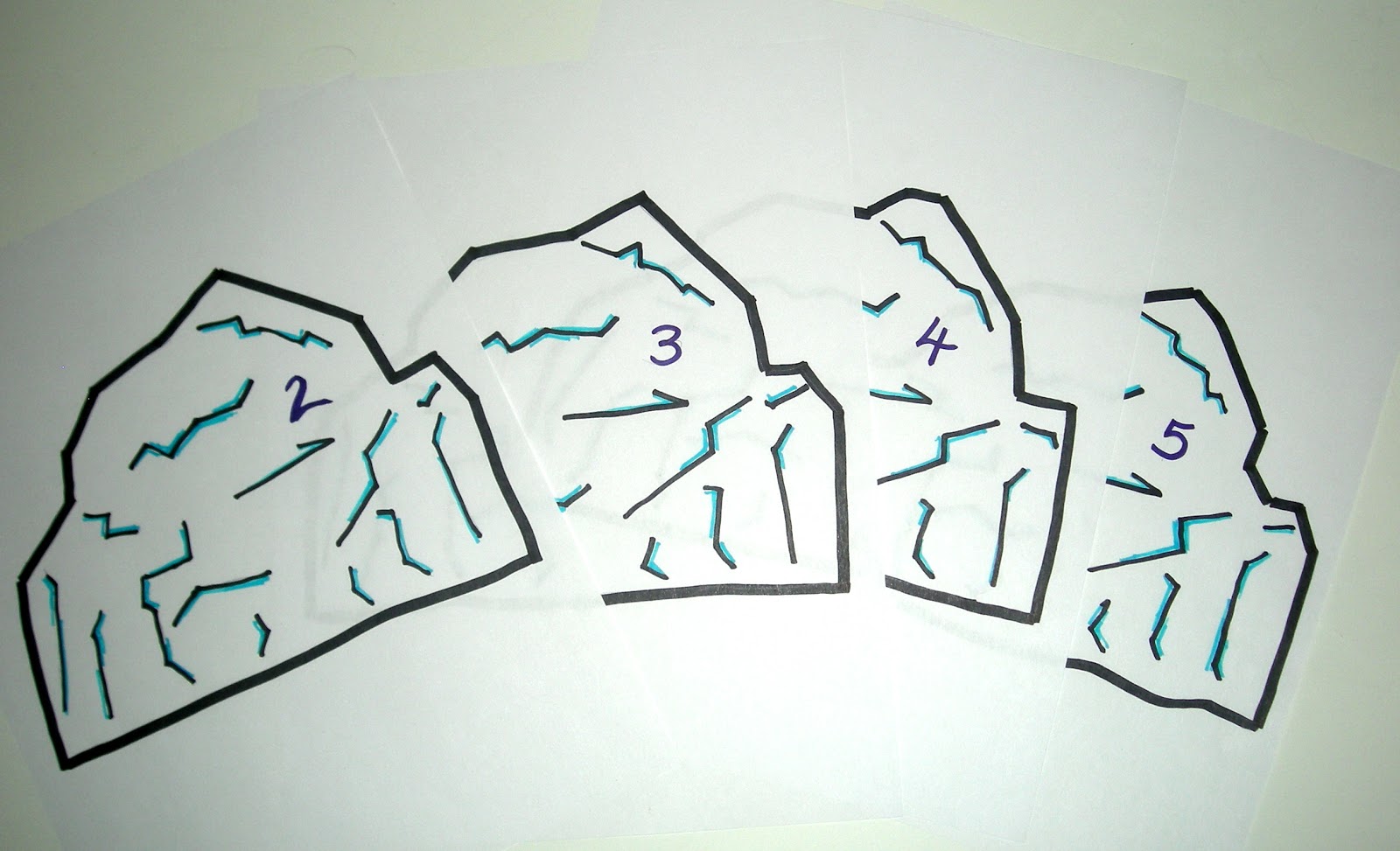
Although it is not an original idea, I decided to post a version of a popular and easily adaptable flannel board game. The theme for January's family story time is "Penguins!" I found the baby penguin clip art in Microsoft Publisher's clip art file and wanted to use the little guy because he is so cute. Since the pieces are easy to make and many others will be doing winter programs, I thought that I would share what I am making for our magnet board.

I printed out the baby penguin and drew five roughly identical icebergs. (Iceberg clip art could also be used.) I numbered each iceberg. The figures shown below have yet to be cut out. I will put blue paper behind the icebergs so that the penguin will not show through the iceberg it is hiding behind. (If you are using felt or heavier paper this might not be a problem.)

The rhyme I will be using is:

Baby penguin, baby penguin,
Where did you hide?
Did you go behind iceberg 1, 2, 3, 4, or 5?


We have not played a hidden object game in family story time since the summer so I think the children will enjoy it.

This week's Flannel Friday Round-Up is hosted by Courtney of Miss Courtney Meets Bobo. Everything you want to know about Flannel Friday can be found here.

Friday, December 7, 2012

It's Not a Worm! It's a Tail!

As I was weeding our professional collection last year, I came across a collection of puppet plays, Pocketful of Puppets: Three Plump Fish and Other Short Stories by Yvonne Winer (Nancy Renfro Studios, 1983). One of the plays, "Three Little Mice with Three Grand Tails," could easily be adapted into a flannel board story. I made a copy and put it into my Family Story Time folder. When I decided to do my recent "Tail Tales" program, I adapted the story for our magnet board. My version is called, "It's Not a Worm! It's a Tail!" It can be found as a Google Drive document here.

I made my own figures for the board with the exception of the frog and owl. I found exactly what I wanted in the clip art file of Microsoft Publisher for the frog. The owl is also from Publisher. I just used the piece that I had made for "Boastful Beaver and His Beautiful Tail." The other figures are based on combinations of various clip art pieces but are basically original. I used marker to color the fish and the frog but used poster paint for the mice and the bird. I prefer using poster paint for large pieces (better coverage and no streaking). I painted all of the mice because I wanted them the same color. I got a little carried away with the big mouse and he turned out quite a bit larger than the others. I originally wanted to make them stand-up figures but ran out of time. I need to find a good way to support the tails. The original plan was to use clothes pins to clip the figures onto the tails but that made them too heavy even though I had put extra card stock on the back to make the tails stronger.


This week's Flannel Friday Round-Up is hosted by Cate of Storytiming. Flannel Friday has everything you need to know including information about past and future round-ups, Flannel Friday's Pinterest boards and Flannel Friday's Facebook page.

Thursday, December 6, 2012

Tail Tales - Evening Family Story Time

Family Story Time - Tail Tales
Thursday, November 29, 2012, 6:30 p.m. to 7:30 p.m., Attendance - 19 (9 children and 10 adults)

Board Stories: "The Cat and the Mouse" (from Multicultural Folktales: Stories to Tell Young Children by Judy Sierra and Robert Kaminski
                       "Boastful Beaver and His Beautiful Tail"
                       "It's Not a Worm! It's a Tail!"

Stick Puppet Story: "The Fox and the Crab"

Guessing Game: "Whose Tail?"

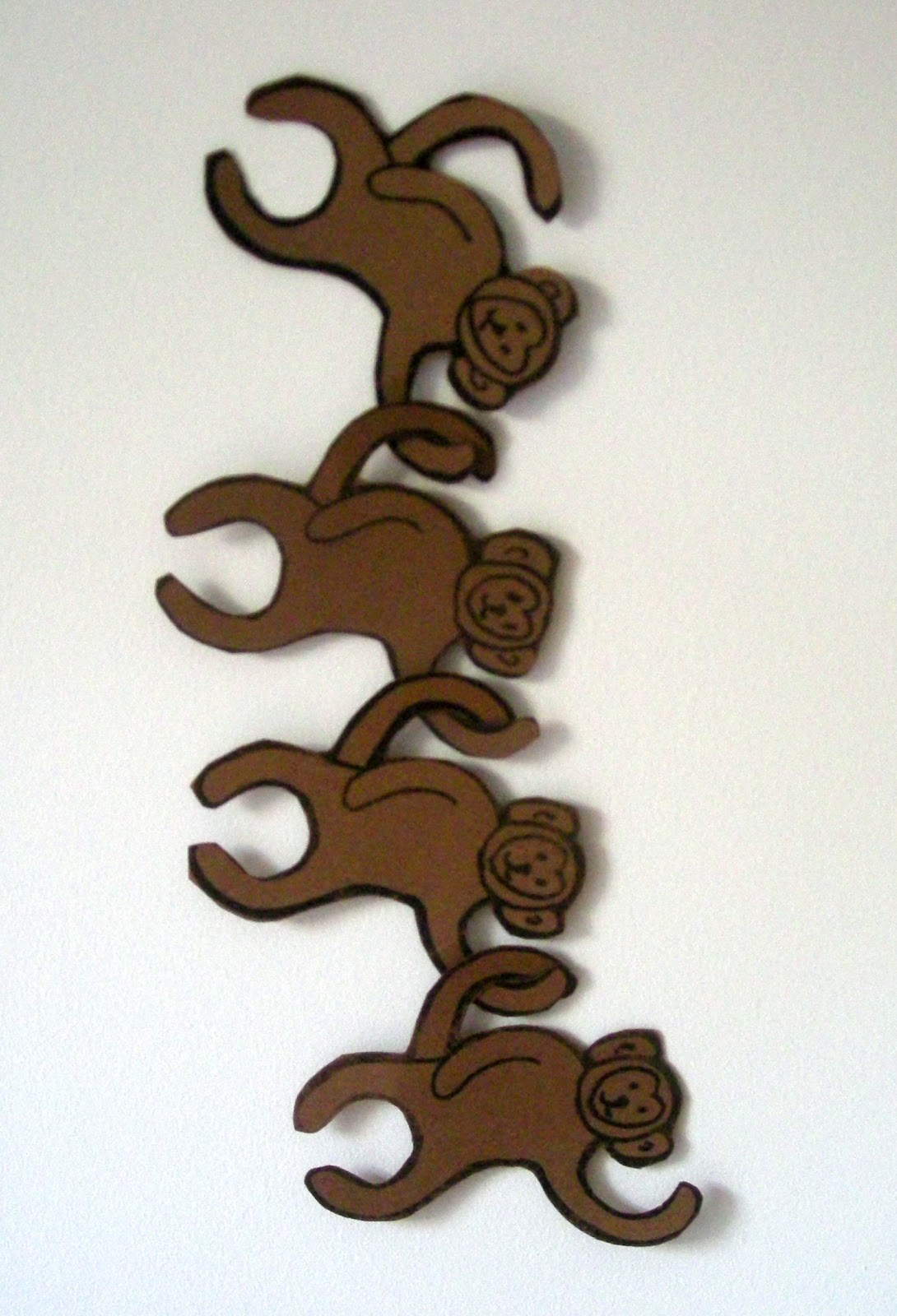
Crafts: Mouse bookmark and Hanging Monkeys

Mouse Bookmark

Monkeys

Patterns


Notes: As expected it was a small group. Not many had signed up. I had worked the two nights before and the children's room had very little traffic. The holiday season has begun and attendance usually drops off this time of year. It may have been small but it was an enthusiastic group made up mostly of regulars. Several dads came which is why there were more adults than children. I now have a core group of families attending which is great. As usual the board stories were well received. I was most impressed with how good the older children were at guessing the animals. I complemented one young lady for guessing blue tailed skink and she replied that she knew the answer because, "I read." I made my own craft templates. The mouse bookmark is based on one that I used years ago which was from a storytime book from the late 1980's or early 1990's. Of course I now no longer remember the author or title. I think the cover was pink. (Couldn't resist - sorry fellow librarians.) The monkeys are based on the game Barrel of Monkeys. Because it was a small group I was able to have all the pieces were precut. The children glued on the mouse ears and a long yarn tail to make the mouse bookmark. They just had to color the monkeys if they wanted. They enjoyed hanging them by their arms and tails. One boy got a chain of six monkeys before one fell off.